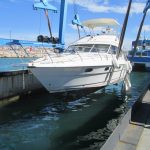
Total sinking due to the failure of an exhaust elbow
Expert inspection of a vessel that sank due to the failure of an exhaust elbow. Investigation into the source of the water ingress and the mechanism of the flooding.
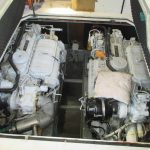
While underway, a vessel equipped with two inboard engines experienced water ingress, which led to the flooding of the engine room and the vessel’s total sinking. The main engines, the generator, and other equipment were submerged in seawater.
At the request of the owners, Orienta SI conducted an inspection following the vessel’s refloating to investigate the source of the flooding and analyze the circumstances that contributed to the incident.
INVESTIGATION INTO THE SOURCE OF THE WATER INGRESS
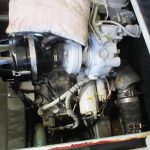
The inspection focused on the exhaust systems, sea inlets and their connections, as well as the available bilge pumping and alarm systems. Documentation regarding maintenance work performed prior to the incident was also reviewed.
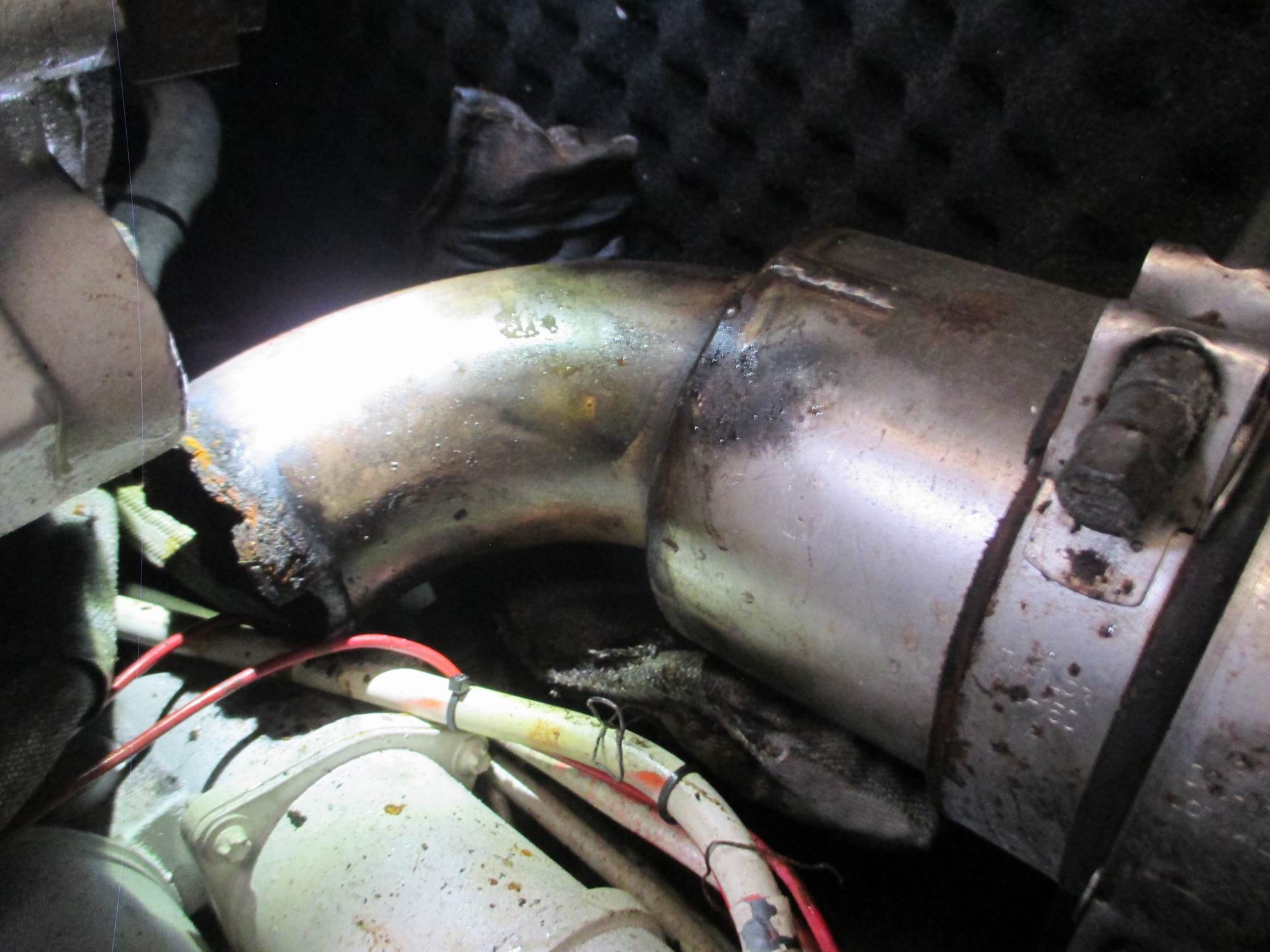
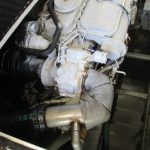
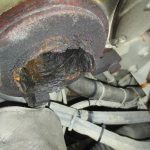
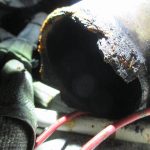
The primary finding was the complete fracture of the exhaust elbow on the starboard engine, located at the outlet of the turbocharger. The fractured area showed advanced corrosion, consistent with a long-term deterioration process.
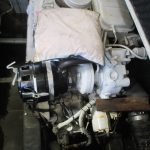
The thermal insulation covering the component concealed the affected area, making it difficult to detect its condition through an external visual inspection.
HOW THE FRACTURE LED TO THE FLOODING
The failure of the exhaust elbow had consequences that extended beyond the loss of integrity in the exhaust system.
In its normal position, the water injection point was situated slightly above the waterline. When the elbow fractured, the exhaust section dropped under its own weight, leaving an opening below sea level that allowed water to enter the engine room.
Compounding this, cooling water—while the engine remained running—was discharged into the vessel’s interior rather than being expelled through the exhaust system.
The available bilge pumping capacity was insufficient to contain the flooding. Furthermore, no bilge-level audible alarm was identified that could have alerted the crew to the accumulation of water.
OUTCOME OF THE INVESTIGATION
The inspection revealed that a fracture in the exhaust elbow was the primary source of the water ingress, allowing for the reconstruction of the flooding mechanism.
This case highlights the importance of examining concealed components within exhaust systems and considering the consequences for the entire installation should one of its parts fail. In this instance, the fracture caused the piping to drop, effectively turning the exhaust system into a direct intake for seawater.
-
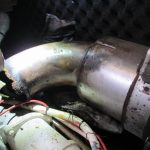
- Rotura del codo de escape identificada durante la inspección posterior al reflotamiento.
